About Me
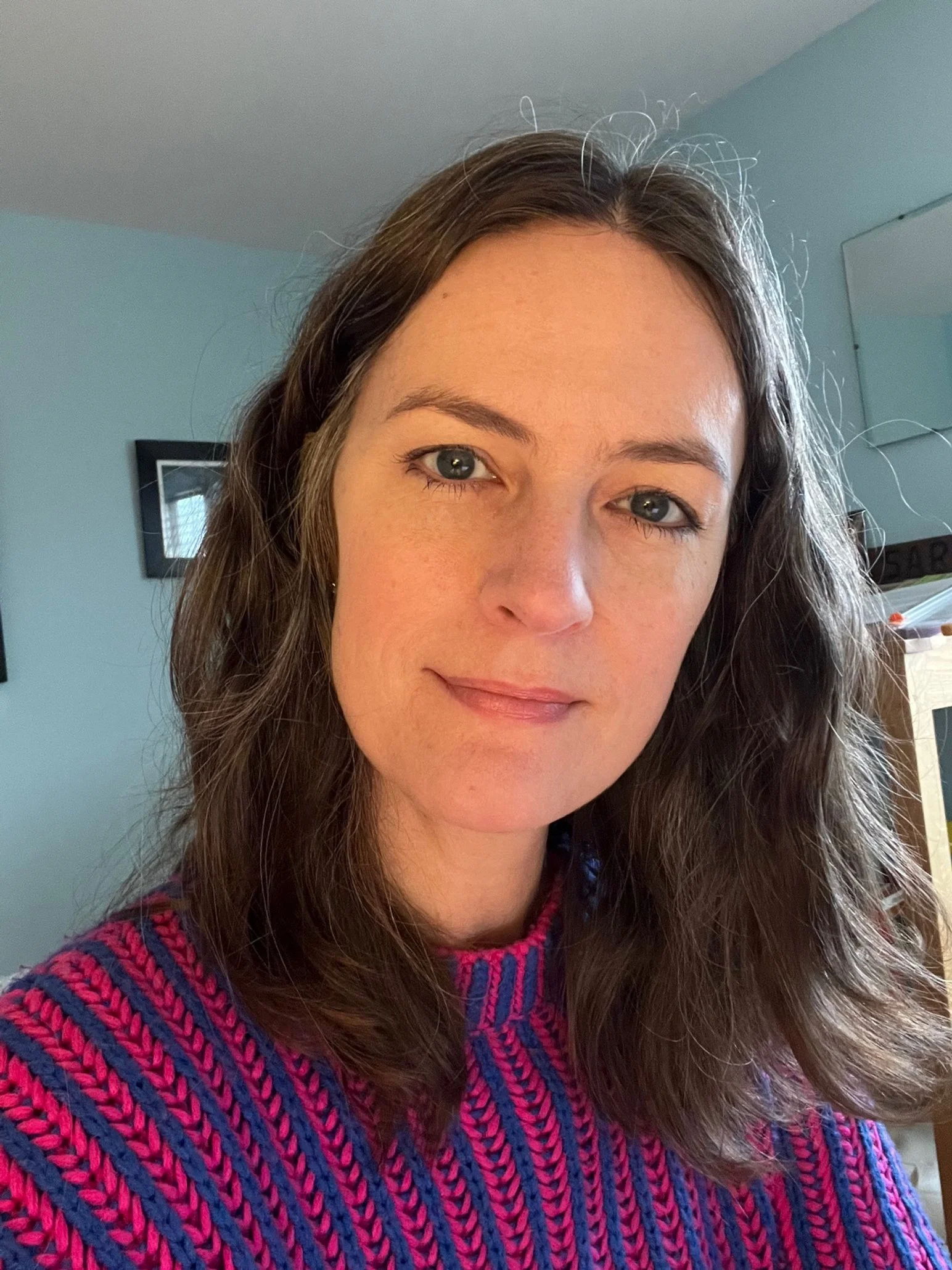
I am a Licensed Clinical Mental Health Counselor (LCMHC #12150) and have been a psychotherapist in private practice since September of 2016. I earned my Master of Arts (MA) in Clinical Mental Health Counseling from Goddard College in Vermont (2015). I also have a Master of Fine Arts in Creative Writing from NC State University (2008). I did my undergraduate studies at Appalachian State University (2004), where I majored in English.
In the summer of 2023 I joined my first process group, and in the fall of that year I was preparing to leave the counseling field and be a freelance literary editor. I’d completed a year-long copy-editing certificate program through the University of California at Sat Diego, and I’d made a website for my editing business. Then I realized I wanted to try my hand at leading process groups.
In the summer of 2024, I started running my first group and deleted my editing website. In 2025 I stopped accepting new individual clients unless they wanted to be in a group. By January of 2026 I was leading or co-leading four process groups a week, and in April of that year, when a stranger at a concert asked me what I did for work, I was delighted to hear myself say for the first time, “I’m a group therapist.”
I receive regular clinical supervision from Pamela Millis, who’s been my most influential mentor since 2016, and who leads the weekly process group that I’m a member of. I’m also in a consultation group for process-group leaders that meets three times a week on Zoom, and I’m a student at the Center for Group studies, where I attend weekend-intensive trainings three times a year, with a plan to graduate from their program in 2028.
why i love group
Spiritual Practice
Because of their here-and-now focus, l like to think of process groups as a type of interpersonal meditation. The work feels deeply spiritual to me, in that it asks us to become more of ourselves, which I see as the most profound and precious task this life assigns to all of us. What is it you’re too afraid to say? Who would you be if you actually said it?
No Small Talk
As an introvert, I am easily drained by most social scenarios in which people talk about their lives rather than live their lives with me, right in front of me. In helping people verbalize their feelings in the moment, I have more access to my own creative energy, which too often goes to psychically managing others’ unexpressed emotions.
Never-Ending Study
I’m a student at heart, and group meets my need for learning like nothing else can. It not only invites us to study our own inner world, which is infinite, but also the inner worlds of others, and how those worlds interact. I’m convinced that even a small group of four or five people could meet every week for decades and never run out of study material.
Personal Growth
I benefit as much (if not more) from leading groups as my members do from participating in them. My confidence and self-compassion have grown exponentially since I stepped into this role. I will never be a perfect group leader or member, and this knowledge frees me up to get better with each session, trusting the process that is me.
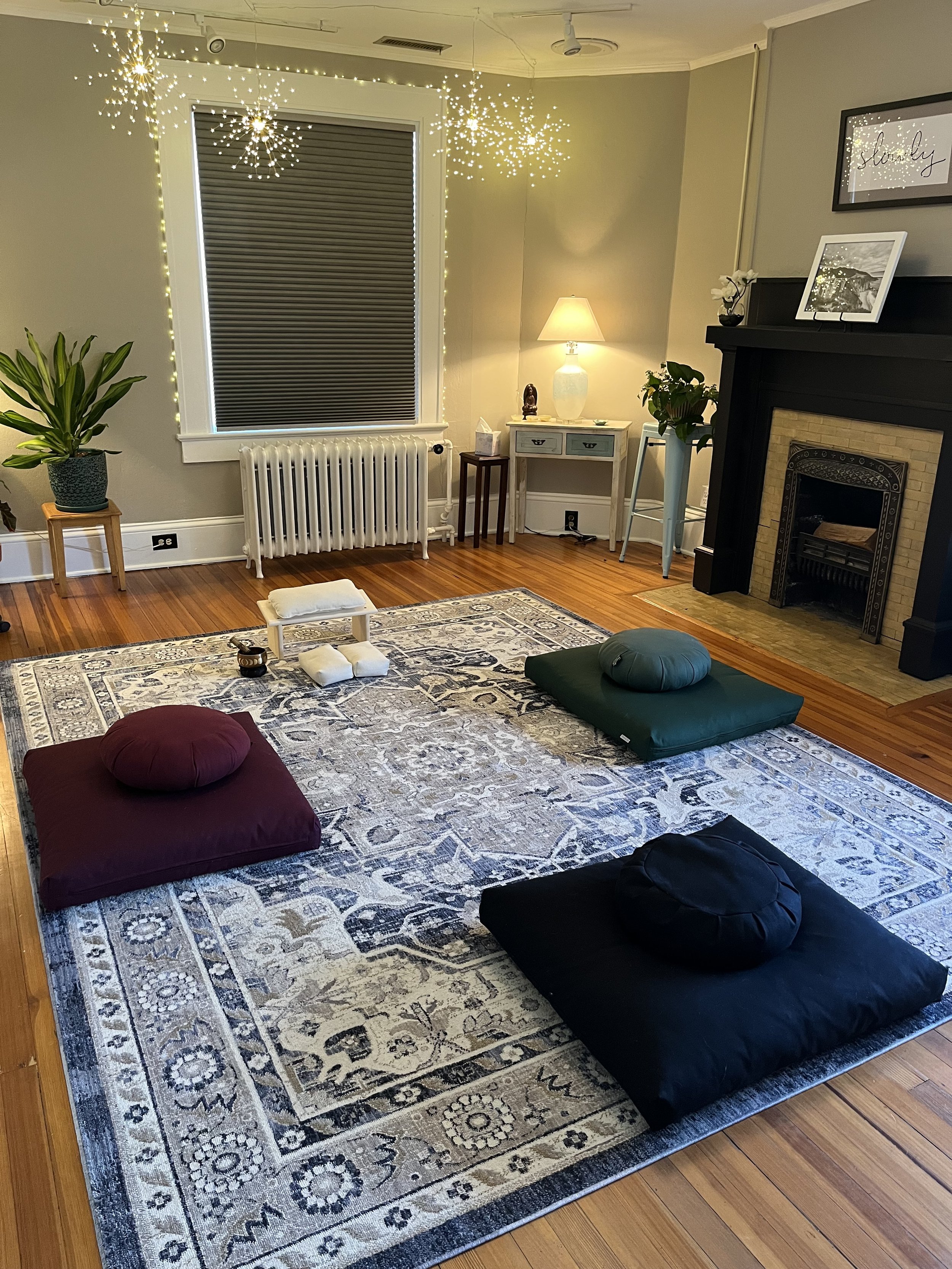
My Tuesday afternoon group for contemplatives starts with a 10-minute silent meditation.
Proud to be a “modern”
The lineage that most informs my work as a group leader is modern psychoanalysis. With its focus on the unconscious forces that influence all of us—both our own and those of others—it is endlessly complex and fascinating, and even downright magical. When we experience an emotion, for instance, and don’t have enough conscious awareness of the feeling to put it into words or otherwise express it, then other people feel it. If those people can then verbalize it, then they help bring our unconscious material into consciousness. There’s so much happening within, between, and amongst us humans at any given moment! In a process group informed by modern analysis, we’re studying why we keep so much of our experience to ourselves.
I’m also drawn to this approach because it supports a spiritual orientation to life. As group therapist Macario Giraldo once said, “I believe in God because I believe in the unconscious.” The unconscious knows everything, says yes to everything, and process groups invite us to get curious about that God-like part of ourselves and what it has to offer. The more we push certain aspects of our psyches away or deny their existence—the more we resist the potential fullness and complexity of our experience—the less access we have to our sacred creativity. Applying the concepts of transference, countertransference, and resistance to my work with groups is some of the most creative work I’ve ever done.
The Asheville Group Psychotherapy Society
In November of 2024, Chris Byrne and I cofounded the Asheville Group Psychotherapy Society. With free monthly meetings and other offerings, AGPS is for helping professionals who lead groups of all kinds, aspire to do so, or simply want to learn more about this fascinating modality. The website also provides a multi-page listing of groups being offered in the Asheville area.